Convenience is King
Conventional wisdom says buyers chase the lowest price. The data says something stranger...

On this page
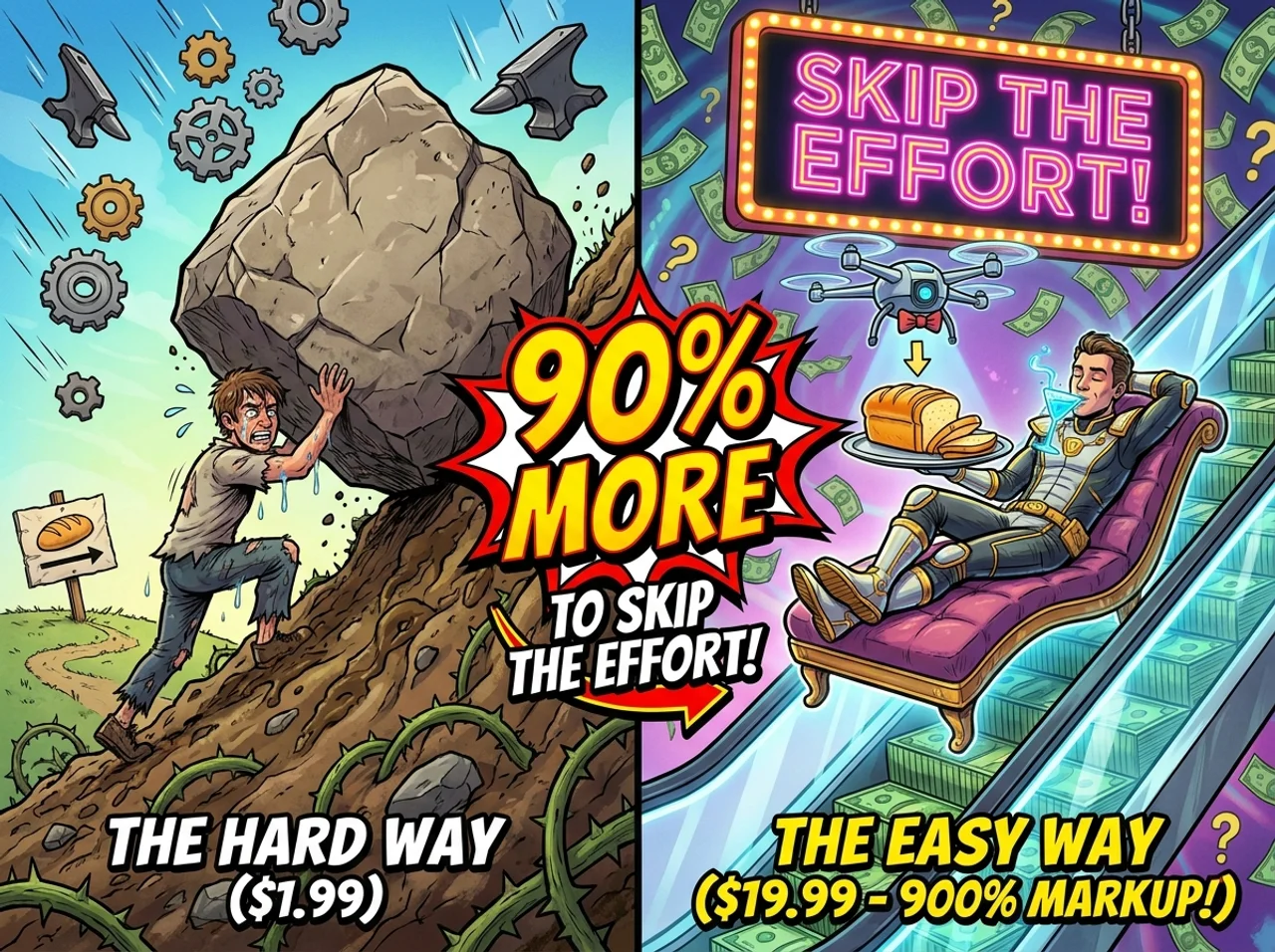
People pay up to 90% more to skip the effort
Conventional wisdom says buyers chase the lowest price. The data says something stranger: under the right conditions, customers will happily reject the cheap option to save a little time, and that instinct is now one of the strongest forces in commerce.
Every purchase costs more than its price. Before any money changes hands, a customer spends something scarcer: time and attention. They have to notice a need, compare options, get to a point of sale, complete the transaction, and deal with anything that goes wrong afterward. Economists have a clumsy name for this hidden tax: the cost of effort. Most businesses still treat it as background noise next to price. That’s a mistake.
The clearest way to see it is to look at what people will pay to make the effort disappear. And the cleanest example on the planet is food delivery.
| 77% | ~5% | 70-90% |
|---|---|---|
| of U.S. consumers name convenience as a key factor in what they buy | the average premium people will pay for convenience across goods | the premium people knowingly pay for food delivery over pickup |
What people actually pay to skip the effort
When a meal is delivered instead of picked up, the food is identical. The only thing the customer is buying is the removal of effort: no driving, no waiting, no leaving the couch. So the gap between the delivery price and the in-person price is a near-perfect measure of what convenience is worth. Independent studies keep landing in the same place, and it isn’t 5%.
The convenience premium, by category. How much extra people pay, versus buying the same thing in person.
| What’s being bought | Premium |
|---|---|
| Average premium, all goods | 5% |
| Delivery menu markup (before fees) | 20% |
| Uber Eats, all-in | 69% |
| McDonald’s via DoorDash | 71% |
| Average delivery vs pickup | 80% |
| DoorDash, all-in | 83% |
| Postmates, all-in | 92% |
Figures vary by study, chain, and city. Average premium: Morgan Stanley. Menu markup: Gordon Haskett (2023). All-in markups incl. tip: FinanceBuzz. McDonald’s comparison: Self Financial. Delivery vs pickup average: LendingTree (2025).
This is not a niche behavior. DoorDash went from a small startup launched in 2013 to processing more than $80 billion in orders a year and roughly $10.7 billion in revenue by 2024, commanding a majority share of the U.S. market. The average American now spends on the order of $1,850 a year on delivery and orders about once a week. None of that growth came from being cheaper. All of it came from being easier.
Part of why people tolerate the markup is a quirk of how we think about money. We file the delivery fee, the service fee, the menu markup, and the tip into separate mental buckets instead of adding them up, so we rarely confront the full premium as a single number. The other part is simpler: for a tired parent or someone without a lunch break, the hour saved genuinely feels worth it. Research on spending bears this out: people who buy back time report higher life satisfaction than people who spend the same money on stuff.
So is it price, or is it convenience?
Both, and they trade off. A real convenience premium exists. Across all goods it averages around 5%, and it runs higher among younger and more affluent buyers. But it isn’t unlimited. When budgets tighten, price snaps back to the front: surveys show affordability is the single biggest barrier to using convenience services, and most consumers will still switch brands for a lower price.
The useful way to think about it is that convenience isn’t a replacement for price; it’s a component of value sitting right next to it. Customers weigh the whole package. And convenience tends to win the decision when the purchase is frequent and routine, when the buyer is short on time, when the product is purely functional, and when the price gap is small. Those conditions describe more and more of modern commerce every year.
Price tends to win the transaction. Convenience tends to win the relationship.
Convenience doesn’t just trigger a sale, it builds loyalty
This is where convenience becomes most valuable, because the things that make a first purchase easy are exactly the things that make leaving hard. Low friction makes the first order effortless. Repetition turns it into a habit, helped along by saved payment details and one-tap reordering. And over time, the accumulated convenience becomes a switching cost. Leaving would mean re-learning, re-entering, and accepting more effort somewhere else.
Amazon Prime is the textbook case. A roughly $139-a-year membership bought primarily to erase shipping friction, bundled with streaming and more, has produced renewal rates reported around 93% after the first year and 98% after the second, with members spending about twice as much as non-members. The same logic now runs one layer down: tens of millions of people pay a monthly fee for DashPass or Uber One on top of an already-premium delivery service, just to make that service feel cheaper to use. Once you’ve paid the fee, you order more to justify it, and you stop comparing alternatives.
Subscriptions take this to its conclusion by removing the repurchase decision entirely. The default is to continue; continuing takes no effort while cancelling takes action. The customer is retained not because they keep choosing you, but because they never have to.
The takeaway isn’t that price stopped mattering; it never will. It’s that convenience has earned a seat at the same table, and for a growing share of purchases it’s the deciding factor. The businesses that understand this treat convenience not as a feature they bolt on, but as the thing they compete on: the steady, quiet work of making it easier to choose them, and easier to keep choosing them.
Sources: Morgan Stanley consumer research; NielsenIQ; PYMNTS Intelligence; Gordon Haskett (2023); FinanceBuzz; Self Financial; LendingTree (2025); DoorDash financial results and industry trackers; McKinsey loyalty analysis; Whillans et al., Buying Time Promotes Happiness (PNAS, 2017). Figures are drawn from published surveys and studies with differing methodologies and should be read as directional. Prepared by Kat Kotrla, Monster Systems.
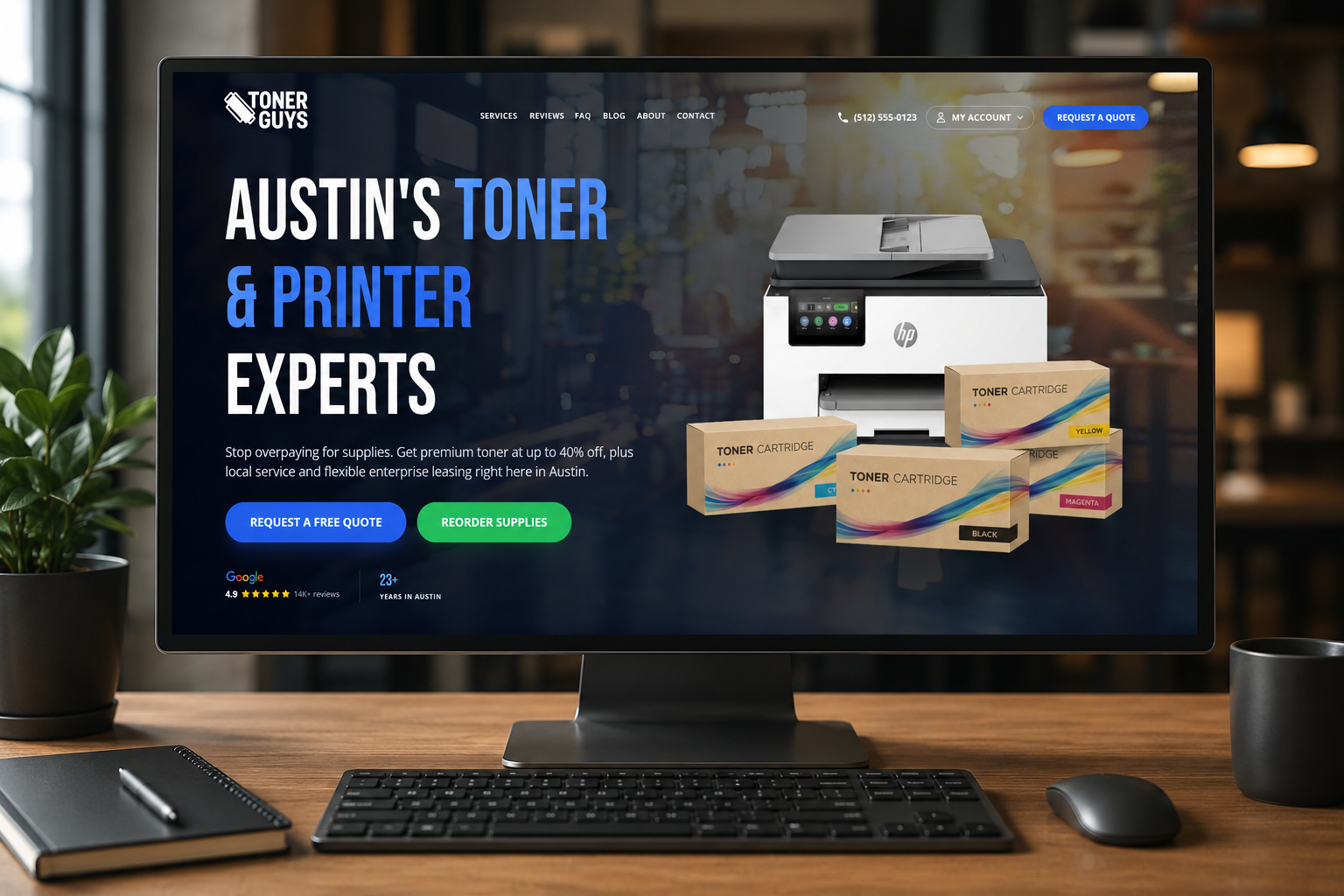
See EasyOrder in action.
Built for independent ink and toner dealers. Personalized ordering, private pricing, one-click reorders. Reorder rates as high as 90%.
EasyOrderEasyOrder ProMonster CRMDealer WebsitesInk & Toner Dealers